Portion Distortion Over Time
Population-level shifts in serving size norms and consumption patterns across decades
Historical Changes in Portion Sizes
Analysis of historical serving size data reveals substantial increases in typical portion sizes offered across food categories, time periods, and eating contexts. Portions served in restaurants, provided in packaged foods, and obtained in commercial food establishments have systematically increased over recent decades.
These historical trends represent shifts in what is considered normal or standard portion size. The normalization of larger portions has created food environments where increased quantities are presented as standard offerings, fundamentally altering the baseline against which individuals evaluate portion appropriateness.
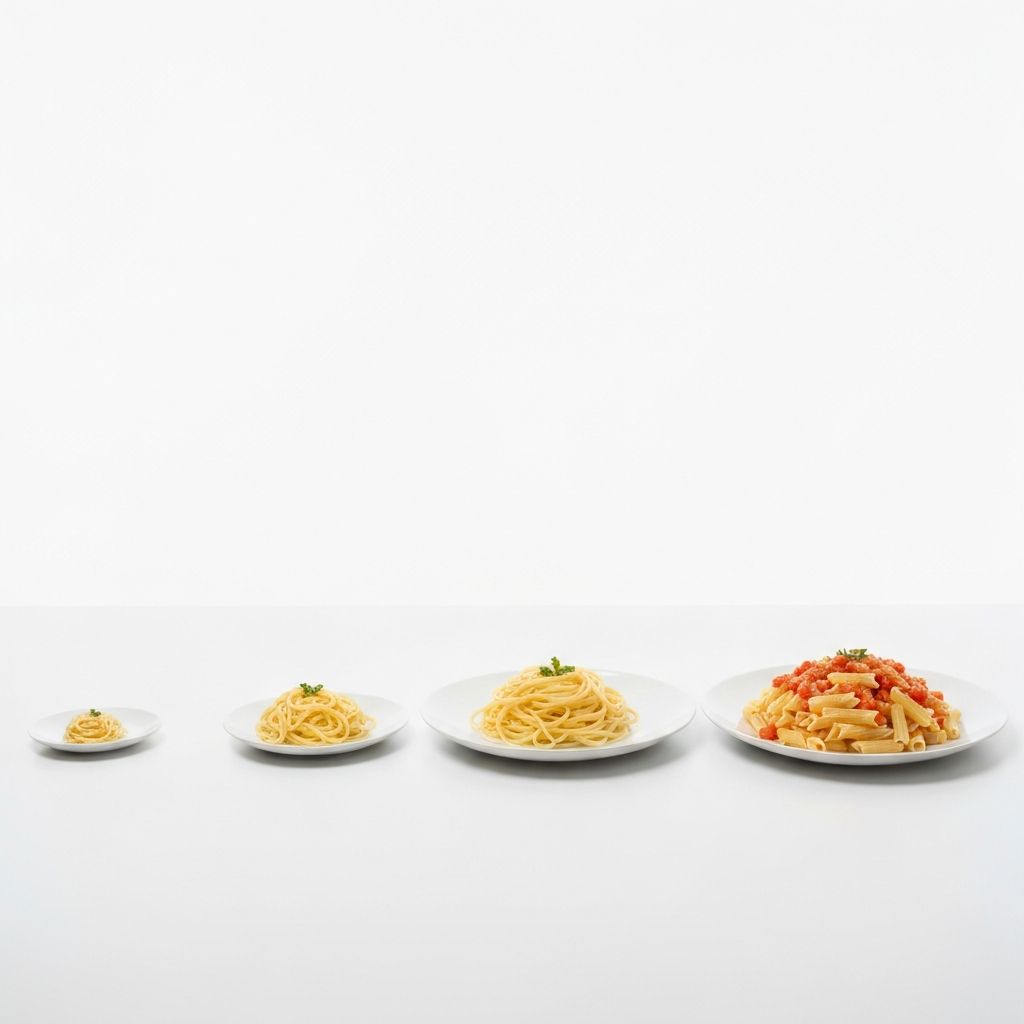
Documentation of Portion Size Increases
Systematic reviews of serving size changes document increases across multiple food categories and decades. Studies comparing current portion sizes with historical standards show that average portions have increased substantially, particularly in commercial food environments.
For example, comparative analysis of restaurant meals, bagels, burgers, and side dishes across decades reveals consistent increases in typical serving sizes. These increases occurred not only in overtly indulgent categories but across mainstream food offerings, suggesting systematic shifts in commercial portion provisioning strategies.
Commercial Drivers of Portion Increases
The increases in commercial portion sizes reflect deliberate business decisions based on economic and competitive considerations. Larger portions serve as value propositions that attract customers and provide cost-effective ways to compete on perceived generosity.
Additionally, increased portion sizes create opportunities for profit margin expansion if food costs do not increase proportionally with portion increases. The economics of food service and retail create competitive pressure toward maintaining and increasing portion sizes to remain competitive with other vendors.
The Normalization Process
As larger portions have become standard in commercial food environments, these increased sizes have undergone normalization—shifting from being perceived as exceptional or generous to being experienced as ordinary. This normalization occurs through repeated exposure and adaptation of expectations to prevalent environmental conditions.
Once larger portions become normalized through widespread availability, they establish new baselines for portion appropriateness. What previously appeared as a large offering becomes the standard reference point. This normalization process creates a ratchet effect where portion size norms shift upward but seldom revert downward.
Generational Differences in Portion Expectations
Differences in exposure to portion size norms across generations create variation in what individuals consider appropriate portion sizes. Younger generations, exposed from early life to larger standard portions, may develop different portion size expectations compared to older generations whose early experiences involved smaller average portions.
These generational differences reflect learned adaptations to the food environments individuals experienced during formative years. The internalization of portion size norms during development creates relative stability in individual portion preferences, even as environmental standards shift across generations.
Psychological Adaptation to Portion Increases
Psychological adaptation mechanisms contribute to the normalization of larger portions. Individuals demonstrate remarkable ability to adapt to changes in their food environments, such that increases in portion availability produce relatively quick adjustments in expectations and satisfaction assessments.
This adaptation process—while enabling individuals to find satisfaction with new portion sizes—can obscure recognition that substantial shifts in portion norms have occurred. The subjective experience of adequacy adapts to environmental changes, reducing the likelihood that individuals consciously perceive portion increases over time.
Impact on Consumption Patterns
The normalization of larger portions has corresponding effects on consumption patterns. Individuals in food environments with systematically larger portions show higher average consumption compared to earlier historical periods. These population-level increases in consumption reflect adaptations to the changed environment of available portions.
Understanding these historical trends illustrates that consumption patterns are not simply expressions of fixed preferences or needs but rather reflect adaptation to available environmental options. Changes in portion availability create corresponding changes in average consumption patterns.
Snacking and Between-Meal Consumption
Historical increases in portion sizes extend beyond meal-time consumption to snacking and between-meal eating. Portions of snack foods, beverages, and other between-meal foods have also increased substantially across decades. These snacking-context portion increases contribute to overall changes in consumption patterns beyond formal meals.
The normalization of larger snack portions and increased availability of snack foods across diverse settings has contributed to expansion of consumption opportunities throughout the day. These shifts in between-meal consumption represent significant environmental changes affecting total energy intake patterns.
Regional and Cultural Variation
While portion size increases are documented across many regions, the magnitude of these increases varies geographically and culturally. Some regions show more dramatic increases compared to others, and some cultural contexts maintain more stable portion norms despite commercial pressures toward expansion.
These regional and cultural differences illustrate that portion size norms, while influenced by commercial practices, also reflect cultural values, traditions, and practices that create variation in how portion sizes have shifted across different populations and contexts.
Recognition and Awareness of Portion Changes
Despite documentation of substantial historical increases in portion sizes, many individuals demonstrate limited awareness of these changes. The gradual nature of portion size increases, combined with psychological adaptation processes, creates circumstances where significant shifts in portion norms occur without corresponding conscious awareness.
This gap between objective historical changes in portions and subjective awareness of these changes reflects the automatic, incremental nature of environmental shifts. Individuals may not consciously recognize portion expansion that occurs gradually across years and decades.
Implications for Understanding Current Consumption
Historical analysis of portion size changes provides context for understanding current consumption patterns and environments. Contemporary portion sizes, though often perceived as normal or standard, represent substantially larger quantities compared to portions available in earlier historical periods.
This information is presented for educational understanding of portion science. Understanding historical portion trends provides context for recognizing that current portion sizes reflect specific commercial and historical circumstances rather than representing universal or timeless standards. Individual food choices and consumption patterns reflect complex interactions with these environmental contexts.
Back to Articles